

 Tiếng việt


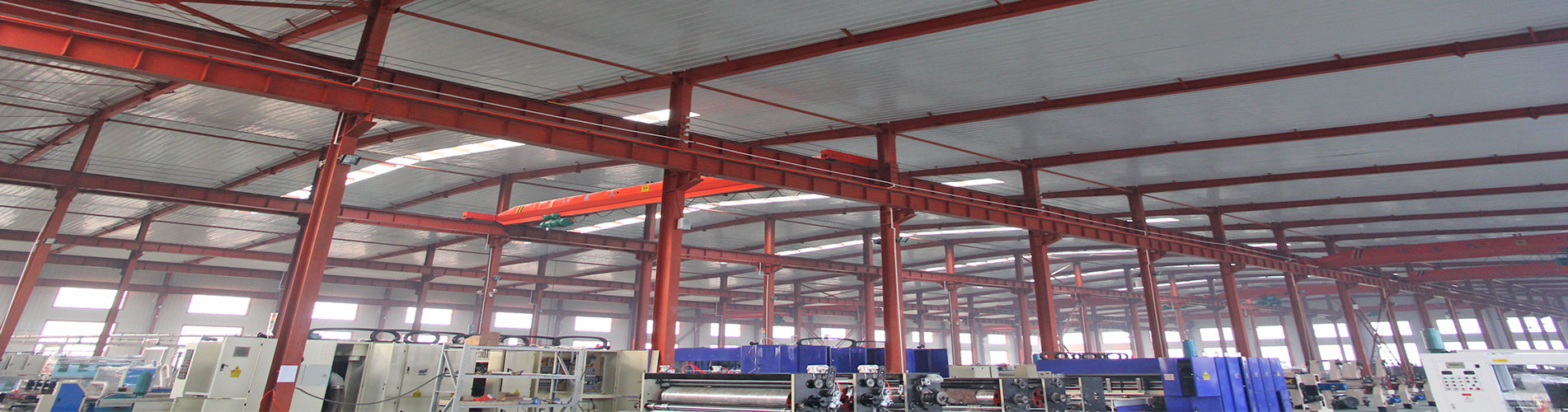

How to ensure the safe construction of steel structure workshop?
Steel structure workshops are widely used in industrial and commercial projects due to their strength, durability, and fast assembly. However, safety during construction is critical—steel erection involves heavy lifting, working at heights, and complex coordination. A single oversight can lead to serious accidents, project delays, or legal liability.
This article outlines practical steps to ensure safe construction of a steel structure workshop from planning to handover.
1. Start with a Detailed Safety Plan
Safety begins long before the first beam is lifted.
Site-specific risk assessment: Identify hazards such as crane operations, high-altitude work, electrical lines, and weather conditions.
Method statements: Prepare step-by-step erection procedures for each phase (foundation, column installation, beam connection, roofing, etc.).
Emergency response plan: Define evacuation routes, first-aid stations, fire control measures, and emergency contacts.
A well-documented safety plan should be reviewed and approved by both the contractor and the client’s safety officer.
2. Use Qualified Personnel and Clear Roles
Steel structure construction is not a job for general laborers alone.
Certified steel erectors: Workers must be trained in rigging, bolting, welding, and fall protection.
Licensed crane operators: Crane work is one of the highest-risk activities; only licensed operators should be used.
Dedicated safety supervisor: Assign a site safety officer who has authority to stop unsafe work immediately.
Daily toolbox talks: Brief workers every morning on the day’s tasks and associated risks.
3. Inspect Materials and Equipment Before Use
Defective materials or faulty equipment are common causes of structural and personal accidents.
Steel members: Check for deformation, rust, missing bolts, or incorrect dimensions against shop drawings.
Lifting gear: Inspect slings, shackles, hooks, and cranes for certification and physical condition.
Scaffolding and platforms: Ensure stability, guardrails, and load capacity before anyone steps on them.
Power tools and welders: Verify grounding, insulation, and gas cylinder safety.
Keep inspection records on site for auditing.
4. Control Work at Height
Most steel erection happens several meters above ground.
Use full-body harnesses anchored to certified lifelines or structures.
Install temporary edge protection as soon as beams are placed.
Avoid working at height during strong wind, rain, or lightning warnings.
Use aerial lifts or controlled access platforms instead of makeshift climbing.
Remember: fall protection is not optional once you are above 2 meters (6.5 ft) without safe flooring.
5. Manage Lifting and Erection Sequentially
Poor lifting sequences can cause partial collapse or swinging loads.
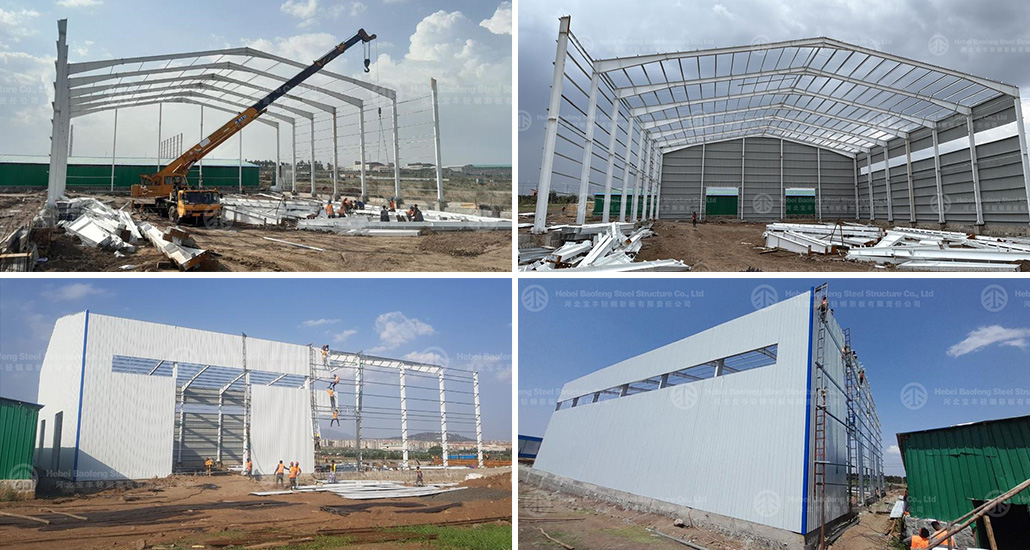
Follow the engineered erection sequence—usually columns first, then primary beams, bracing, and secondary members.
Use tag lines to control load swing.
Keep non-essential personnel out of the lifting zone (barricade and signage).
Never lift over workers’ heads.
Bolt connections temporarily and check alignment before final tightening.
6. Ensure Structural Stability During Construction
A steel frame is not fully stable until all bracing and connections are complete.
Install temporary bracing where permanent bracing is not yet in place.
Do not remove shipping braces until the member is permanently fixed.
Monitor plumbness and alignment continuously.
Avoid loading floors or roofs prematurely.
Structural engineers should approve any deviation from the original stabilization plan.
7. Coordinate Utilities and Underground Hazards
Before excavation or drilling:
Locate underground cables, water lines, and gas pipes.
De-energize overhead power lines or maintain safe clearance (follow local electrical safety distances).
Mark all utilities clearly on the ground.
Contact with live lines during steel handling is fatal.
8. Weather and Site Housekeeping
Wind speed limits: Most steel erection stops above 20–25 m/s depending on member size.
Lightning policy: Suspend work and move to shelter immediately.
Housekeeping: Remove scrap, oil, and trip hazards daily.
Access roads: Keep crane paths compacted and free from mud holes.
Good housekeeping is often the cheapest safety measure.
9. Welding and Fire Prevention
Steel workshops involve intensive welding.
Use fire-resistant blankets near combustible materials.
Assign a fire watch during and 30 minutes after welding.
Store gas cylinders upright, capped, and separated (oxygen vs. acetylene).
Provide adequate ventilation in enclosed weld areas.
10. Continuous Monitoring and Handover
Conduct weekly safety audits and close corrective actions quickly.
Use drone or camera checks for hard-to-reach connections.
Before handover, verify that all permanent bracing, walkways, railings, and fire ratings meet the design.
Train the client’s maintenance team on safe access for future inspections.
Thể loại
blog mới nhất


Cho .Thắc mắc về sản phẩm hoặc bảng giá của chúng tôi, xin vui lòng để lại cho chúng tôi và chúng tôi sẽ liên lạc trong vòng 24 giờ.
© Bản quyền: 2026 Hebei Baofeng Steel Structure CO.,LTD Đã đăng ký Bản quyền.

IPv6 mạng được hỗ trợ


 +8615720226351